
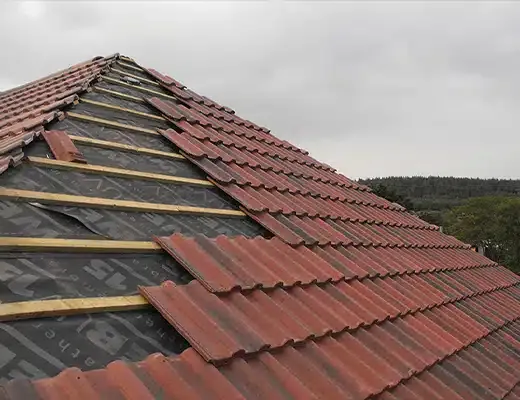
A storm has damaged your roof. Slates are missing, water is coming in, and you need to act quickly. Making a storm damage roof insurance claim in the UK can feel overwhelming, but the process is straightforward if you follow the right steps. This guide covers what to do right now, how to document the damage, and how to navigate the claims process with your insurer.
Edinburgh and the Scottish Borders experience some of the harshest weather in the UK. Met Office climate data shows that eastern Scotland regularly records high wind gusts during autumn and winter storms. Autumn and winter storms routinely dislodge slates, strip lead flashing, and bring down chimney stacks across the region.
Whether the damage happened last night or you are preparing for storm season, here is what you need to know.
What to Do Immediately After Storm Damage
If your roof has been damaged during a storm, follow these steps in order:
1. Protect yourself and your household
Do not go onto the roof. Stay indoors if debris is still falling or wind speeds are dangerous. If water is coming through the ceiling, move furniture and valuables away from the affected area and place containers to catch drips. Turn off any electrical circuits in rooms where water is entering near light fittings or sockets.
2. Call an emergency roofer
Contact an emergency roofing service to carry out temporary repairs as soon as it is safe to do so. A qualified roofer can tarp exposed areas, secure loose materials, and stop active leaks before permanent repairs are arranged.
Most insurers expect you to take reasonable steps to prevent further damage. Failing to do so can reduce your claim, so do not delay this step.
3. Document everything before anything is moved or repaired
Before any permanent repair work begins, photograph and record all damage thoroughly. This evidence is essential for your insurance claim.
What to photograph:
- Wide shots showing the overall roof damage from ground level
- Close-up shots of specific damage (missing slates, cracked tiles, displaced flashing)
- Internal damage (water stains, wet insulation, damaged ceilings or walls)
- Any debris on the ground (fallen slates, ridge tiles, chimney masonry)
- Damage to guttering, fascias, or soffits
What to write down:
- The date and approximate time you first noticed the damage
- Weather conditions during and after the storm
- A description of what happened (e.g., “woke to find 12 slates missing from the south-facing slope”)
- Any damage to neighbouring properties or vehicles
Keep copies of all emergency call-out receipts, temporary repair invoices, and any correspondence with contractors.
4. Notify your insurer
Contact your buildings insurance provider as soon as practically possible. Check your policy for any notification deadline, as some require you to report damage within a set period. Notifying sooner strengthens your claim. Have your policy number, photographs, and a written description of the damage ready when you call.
How a Storm Damage Roof Insurance Claim Works in the UK
Insurance claims for storm damage follow a broadly standard process across most UK providers, though the details vary by policy. Here is what to expect.
Step 1: Report the claim
Call your insurer’s claims line and provide details of the damage. They will give you a claim reference number. Some insurers allow you to submit claims online or through an app, with photographs uploaded directly.
Step 2: Assessment
Your insurer will assess the claim in one of two ways:
- For smaller claims: the insurer may accept your photographs, contractor quotes, and description without sending anyone to inspect
- For larger claims: the insurer will typically send a loss adjuster to inspect the damage in person. The loss adjuster works for the insurer, not for you. Their role is to verify the cause of the damage, assess the extent, and determine whether the claim falls within your policy terms
You are entitled to get your own independent quotes and assessments. Having a detailed report from a qualified roofer strengthens your position, especially if the loss adjuster’s assessment differs from what your contractor has found.
Step 3: Approval and repair
Once the claim is approved, you can usually choose your own contractor for the repair work. Some insurers have approved contractor networks, but in most cases you are not required to use them. Getting independent quotes from a qualified local roofer gives you a point of comparison.
Your insurer will either pay the contractor directly or reimburse you after the work is completed, depending on the policy.
What Home Insurance Typically Covers for Storm Damage
Standard UK buildings insurance policies usually cover sudden damage caused by a specific storm event. However, cover varies between providers, so always check your own policy wording.
Typically covered:
- Slates or tiles dislodged or broken by high winds
- Chimney damage from storm impact (cracked pots, fallen stacks, displaced flashing)
- Structural damage from fallen trees or large debris
- Water damage to internal ceilings, walls, and floors caused by storm-related roof breaches
- Emergency temporary repairs to prevent further damage
Typically not covered:
- General wear and tear or gradual deterioration
- Pre-existing damage that worsened during the storm
- Damage caused by lack of maintenance (blocked gutters leading to overflow, cracked flashing left unrepaired)
- Cosmetic damage with no functional impact
- Fences, gates, and some outbuildings (check your policy)
The Financial Ombudsman Service explains that insurers do not pay simply because damage appeared after bad weather. They typically need to establish that:
- Storm conditions actually occurred (many policies define this using Beaufort scale thresholds, such as wind speeds above 55mph, though definitions vary by provider)
- The damage is consistent with storm damage and the storm was the dominant cause
- The roof was in reasonable condition before the storm
This is why documenting the condition of your roof before storm season matters. If you have had a recent roof inspection or can show that your roof was well-maintained, your claim is significantly stronger.
The Difference Between Storm Damage and Wear and Tear
This distinction is where most storm damage claims are disputed. Insurers will investigate whether the storm caused the damage or simply exposed an existing weakness.
Example of a valid storm damage claim: a well-maintained 20-year-old slate roof loses 8 slates during a named storm with recorded wind speeds above 60mph. The slates were secure before the storm and the damage is clearly event-related.
Example of a likely declined claim: a 40-year-old concrete tile roof has been showing signs of deterioration for years. Several tiles had already cracked and the flashing was pulling away from the chimney. After a storm, water comes in through multiple points. The insurer argues the damage is primarily due to age and neglect, not the storm event itself.
The best way to protect yourself is to maintain your roof proactively. Regular inspections, prompt repairs, and keeping a record of any work carried out all help demonstrate that your roof was in sound condition before the weather hit. If you have a leak that may not be storm-related, our guide on why roofs leak covers the most common causes.
Edinburgh and the Scottish Borders: Regional Considerations
Scotland’s east coast and the Borders face specific weather challenges that affect both storm damage risk and insurance claims.
Higher wind exposure: properties in exposed locations such as hilltop villages in the Scottish Borders, coastal towns in East Lothian, and elevated Edinburgh suburbs face higher average wind speeds than sheltered inland areas. This increases the frequency of storm damage events.
Older housing stock: Edinburgh’s Victorian and Georgian tenements often have original natural slate roofs that are more vulnerable to wind uplift than modern mechanically fixed systems. The slates themselves may be sound, but the original nails and fixings can corrode over decades, leaving slates held in place by gravity alone.
Chimney vulnerability: Scottish properties tend to have taller chimney stacks than English equivalents, designed for coal fires and drawing in high winds. These chimneys are disproportionately affected by storm damage, with cracked pots, fallen masonry, and displaced lead flashing being among the most common callouts after severe weather.
Multiple property claims: tenement properties in Edinburgh can present complications when storm damage affects a shared roof. Responsibility for repair costs depends on your title deeds. Where deeds are silent or unclear, the Tenements (Scotland) Act 2004 provides a fallback framework for dividing costs. Some tenement blocks have common buildings insurance policies, while others require each owner to claim individually. Check your title deeds and factor or property manager for the arrangement that applies to your building.
How to Prepare Before Storm Season
Taking a few preventive steps before autumn reduces both the risk of damage and the difficulty of making a claim if the worst happens.
Before storm season:
- Book a professional roof inspection and have any minor issues repaired
- Clear gutters and downpipes so drainage is unobstructed
- Check that chimney flashing is secure and repointed where needed
- Photograph your roof from all accessible angles in good condition (this becomes evidence of pre-storm condition)
- Review your buildings insurance policy and check what excess applies
- Keep your insurer’s claims line number saved in your phone
- Know who to call for emergency roofing before you need them
If your roof is already showing signs of wear, consider whether a repair or replacement is the better investment before winter arrives.
Frequently Asked Questions
Does home insurance cover storm damage to a roof?
Most standard UK buildings insurance policies cover sudden storm damage caused by a specific weather event. However, damage resulting from wear and tear, gradual deterioration, or lack of maintenance is typically excluded. Check your policy wording for the specific definition of “storm” your insurer uses and what excess applies.
How long do I have to make a storm damage insurance claim?
Check your policy for the notification deadline, as timeframes vary between providers. Contact your insurer as soon as possible after the damage occurs. Delays can weaken your claim, and most policies require you to take immediate steps to prevent further damage from occurring.
Will the insurance company send someone to inspect?
For smaller claims, insurers may accept photographs and contractor quotes without a physical inspection. For larger or more complex claims, they will typically send a loss adjuster to inspect the damage in person. You can also arrange your own independent assessment from a qualified roofer.
Can I choose my own roofer for insurance repairs?
In most cases, yes. Some insurers offer a panel of approved contractors, but you are usually not obliged to use them. Getting quotes from a local roofer with experience in storm damage repairs is worthwhile, as they will understand your area and roof type.
What if my insurance claim is rejected?
If your claim is declined and you believe the decision is wrong, you can appeal through your insurer’s internal complaints process. If that does not resolve it, you can escalate to the Financial Ombudsman Service, which provides free, independent dispute resolution for UK insurance complaints.
Act Quickly and Document Everything
Dealing with a storm damage roof insurance claim in the UK is manageable if you follow the process. Protect your home from further damage immediately, document everything before repairs begin, notify your insurer promptly, and keep records of all communication and invoices.
If your roof has been damaged by a storm and you need urgent help, First Choice Roof Repairs provides emergency roofing callouts across Edinburgh, the Lothians, and the Scottish Borders. We can carry out temporary weatherproofing, assess the full extent of the damage, and provide a detailed report to support your insurance claim. You can see examples of storm damage work in our project gallery.
Call us on 07473 431365 for an emergency callout, or request an assessment.
Need Help With Your Roof?
Get a free, no-obligation quote from our experienced team. We cover Edinburgh, the Lothians, and the Scottish Borders.
Get in Touch
Get Your Free Quote
Complete the form or give us a call. We will get back to you to arrange a free, no-obligation estimate for your roofing project.
- 07473 431365
- firstchoiceroofrepairsltd@gmail.com
- Pencraig House, Monksmuir Park, Haddington, EH41 3SB