
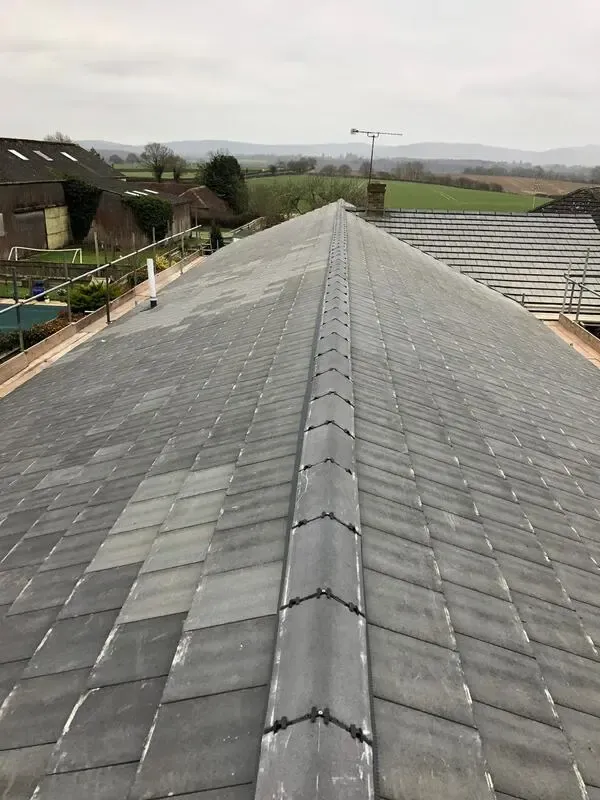
The best time to prepare your roof for winter in Scotland is September and October, before the first named storm arrives and while roofers still have space in the diary. The preparation itself is straightforward: check the roof from ground level, clear the gutters, deal with moss, look inside the loft, and fix any small defects while they are still small. This guide walks through each job in order, explains why Scottish winters punish roofs harder than most, and tells you which tasks are safe to do yourself and which need a professional.
A slipped slate that costs little to sort on a calm October morning can become a soaked ceiling, ruined insulation and an emergency call-out in the middle of a January gale. An hour of checking in autumn is the cheapest roof work you will ever do.
Why Scottish Winters Are Hard on Roofs
Scotland’s winter weather attacks a roof from three directions at once.
Wind. The Met Office storm naming season runs from early September, and the most damaging storms typically arrive between October and February. They are not rare events. Storm Eowyn in January 2025 brought a red warning and a gust of 100mph recorded at Drumalbin in South Lanarkshire, and central Scotland spent days clearing up slipped slates, lost ridge tiles and stripped flashings afterwards.
Freeze-thaw. Water expands by around 9% when it freezes. Every drop sitting in a hairline crack, a mortar joint or under a slate becomes a tiny lever each time the temperature crosses zero, and in an average Scottish winter it crosses zero dozens of times. Cracked slates, crumbling ridge mortar and delaminating concrete tiles are mostly freeze-thaw damage that started as something trivial.
Water with no chance to dry. Short days, low sun and persistent rain mean a Scottish roof can stay wet for weeks at a time. Moss thrives, timber stays damp, and small leaks that would evaporate harmlessly in June soak steadily into the structure instead.
Exposed locations get all three amplified. If you live somewhere like Penicuik at the foot of the Pentlands, a Borders hill town, or anywhere on the coast, your roof works harder in winter than the same roof would ten miles away in shelter.
Your Autumn Roof Checklist: 8 Jobs Before the First Storm
Work through these in roughly this order. None of them require you to set foot on the roof, and you should not. Ladder falls injure far more homeowners than roof leaks do, so everything here is done from the ground, from a window, or from inside the loft.
1. Inspect the roof from ground level
Walk around the house with binoculars, or use your phone camera zoomed in. You are looking for slipped, cracked or missing slates and tiles, gaps along the ridge line, sagging sections, and vegetation growing out of the roof or gutters. Check the roof after any windy spell through autumn, not just once. Our guide to 5 signs your roof needs repair covers exactly what each warning sign looks like.
2. Clear gutters and downpipes
Blocked gutters are the single most common cause of winter damp problems we see. When leaves and moss block the run, rainwater overflows down the wall, saturates the stonework and eventually finds its way inside. Gutters should be cleared at least once a year, and twice if you have trees nearby. Time the main clear-out for late October or November, after most of the leaves are down. If your gutters are sagging, leaking at the joints or pulling away from the fascia, a gutter repair before winter costs far less than the damp repairs it prevents.
3. Check flashings, ridges and pointing
Lead flashings around chimneys, dormers and valleys are where most winter leaks start. From the ground, look for flashing that has lifted, wrinkled or pulled out of its mortar joint, and check chimney stacks for crumbling pointing or cracked cement caps. Tall stacks take the full force of winter weather, and a failed joint lets water straight into the heart of the house. Anything suspect around a chimney is a job for a chimney repair specialist, not a ladder and a tube of sealant.
4. Deal with moss before the first frost
Moss is not just cosmetic. It holds water against the roof surface, and when that water freezes it lifts tile surfaces and works slates loose. Clumps of moss also wash into gutters and block them. The right time to deal with it is autumn, before the freeze-thaw cycle starts. Proper roof cleaning and moss removal is done by hand and soft washing, never pressure washing, which strips the surface off slates and tiles and drives water under the roof covering.
5. Look inside the loft
Pick a rainy day, take a torch, and look along the underside of the roof. Daylight showing through, damp patches on the timbers, wet or compressed insulation, and mould on the sarking boards all point to water getting in. Also check that loft vents are not blocked by insulation. Poor ventilation causes condensation through winter, which can soak a roof structure from the inside as effectively as any leak. If you find staining and are not sure what is causing it, our guide to why roofs leak covers the most common culprits.
6. Give flat roofs some attention
Flat roofs on garages, extensions and dormers need their own check. Clear off leaves and debris, make sure the outlet is not blocked, and look for ponding water, blisters, splits and lifted edges. Felt roofs in particular tend to fail at the point where standing water freezes. If your flat roof is more than 15 to 20 years old and showing any of these signs, have a flat roofing specialist look at it before winter rather than after.
7. Cut back overhanging branches
Branches that touch or overhang the roof do three kinds of winter damage: they scrape the surface in wind, they drop leaves straight into the gutters, and in a storm they can come down entirely. Cut back anything within reach of the roof while the weather is still calm enough to do it safely.
8. Book a professional roof inspection
Everything above is what you can see from the ground. A roofer sees the rest: the condition of the underlay, hairline cracks, nail fatigue, and the early-stage defects that become winter emergencies. We offer free roof inspections across Edinburgh, the Lothians and the Borders, with an honest written summary of what needs doing now and what can safely wait. Booking in September or October means any repair work happens in decent weather, not in the queue after the first storm.
Fix Small Problems While They Are Still Small
The gap between a minor repair and a major one is usually just time. One slipped slate lets water onto the underlay. Over a wet winter the underlay rots, the batten follows, and by spring the job involves scaffolding and a carpenter. The same slate refixed in October is a quick visit.
Roof repairs can be done year-round in Scotland, but winter work is hostage to weather windows, daylight and demand. After every named storm, every roofer in the region is booked solid for weeks. Getting ahead of the season means your job is done properly, at a sensible pace, by someone who is not triaging emergencies.
A Note for Tenement and Shared-Roof Owners
If you own a flat in a tenement, the roof is almost always a shared responsibility, and organising repairs takes longer because every owner needs to agree. The Scottish Government’s guidance on shared building repairs explains how decisions and cost shares work. The practical advice is simple: raise roof concerns with your neighbours or factor in early autumn, because assembling agreement in the aftermath of a February leak is the worst possible time to start.
What If a Storm Hits Anyway?
Preparation shortens the odds but does not make a roof stormproof. If winter weather does get through, stay off the roof, move belongings clear of any water coming in, and call an emergency roofer to make the property safe and watertight. If the damage is significant, photograph everything before repairs begin. Our guide to storm damage repairs and insurance claims walks through the whole process step by step.
Frequently Asked Questions
When should I prepare my roof for winter in Scotland?
September and October are ideal. The weather is still workable, roofers have availability, and any defects you find can be repaired before the storm season peaks between October and February. Leave the final gutter clear-out until late October or November, once most leaves are down.
How often should gutters be cleaned?
At least once a year, and twice a year if trees overhang or stand near the house. The important clean is the autumn one, after leaf fall and before the heaviest winter rain. Blocked gutters overflow down walls and cause damp, so it is maintenance worth keeping on top of.
Can roof repairs be done in winter in Scotland?
Yes. Repairs, emergency work and most maintenance carry on year-round, working around weather windows. Larger jobs like full re-roofs are better scheduled for drier months where possible. The real winter problem is demand: after a named storm, waiting lists grow quickly, which is why autumn preparation pays off.
Is moss on a roof actually a problem?
Yes. Moss holds water against slates and tiles, and when that water freezes it expands by around 9%, lifting tile surfaces and loosening fixings. Moss also blocks gutters as it washes off. Removing it in autumn, by hand and soft washing rather than pressure washing, protects the roof through the freeze-thaw season.
Get Winter-Ready With a Free Roof Inspection
You do not need to guess whether your roof is ready for winter. We will look for you, for free. First Choice Roof Repairs carries out no-obligation roof inspections across Edinburgh, the Lothians, the Scottish Borders and Northumberland, with a straightforward verdict on what needs attention before the storms and what does not. Book a free inspection or call 07473 431365, and go into winter knowing the roof is one thing you will not have to think about.
Need Help With Your Roof?
Get a free, no-obligation quote from our experienced team. We cover Edinburgh, the Lothians, and the Scottish Borders.
Get in Touch
Get Your Free Quote
Complete the form or give us a call. We will get back to you to arrange a free, no-obligation estimate for your roofing project.
- 07473 431365
- firstchoiceroofrepairsltd@gmail.com
- Pencraig House, Monksmuir Park, Haddington, EH41 3SB