
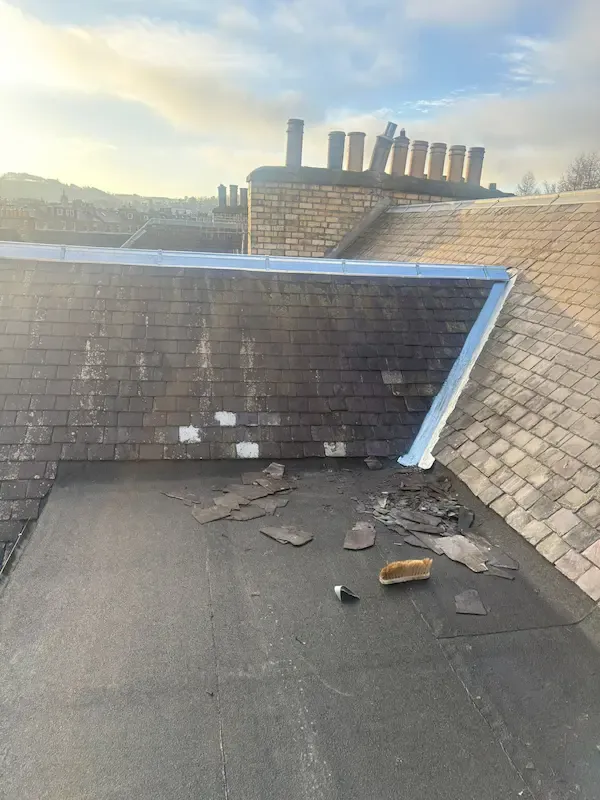
Knowing the signs your roof needs repair can save you hundreds, sometimes thousands, of pounds. Most roof damage in Edinburgh starts small. A hairline crack in a slate. A tiny damp patch on a bedroom ceiling. Left unchecked, these minor issues escalate into structural problems, water damage, and costly emergency callouts.
This guide covers the five most common warning signs of roof damage Edinburgh homeowners should watch for, what causes each one, and when to call a professional roofer.
1. Damp Patches and Water Stains on Ceilings or Walls
Brown or yellow stains spreading across your ceiling are one of the clearest roof leak signs. Water is getting in through damaged slates, cracked flashing, or a failing valley gutter and soaking into the plasterwork below.
What makes this tricky: the stain is rarely directly below the leak. Water travels along roof timbers before dripping through, which means the actual entry point could be metres away from where the damage appears. That is why a proper roof inspection matters. Guessing at the source often leads to wasted time and money.
Act quickly if you notice:
- Damp patches that grow after rainfall
- Peeling paint or bubbling wallpaper near the roofline
- A musty smell in upstairs rooms or the loft space
- Visible mould growth on ceilings or in corners
A small leak caught early is a straightforward roof repair. Left for months, it can cause timber rot, damaged electrics, and mould that affects your health.
2. Slipped, Cracked, or Missing Slates and Tiles
Take a look at your roof from the pavement. Can you see gaps where slates or tiles have moved, cracked, or disappeared entirely? Even one missing slate exposes the felt and timber underneath to rainwater.
This is especially common across Edinburgh and East Lothian, where older properties with natural slate roofs take a beating from Scottish weather. Fixing nails corrode over time, mortar beds crack, and winter storms finish the job.
The cost of waiting: a few slipped slates repaired promptly might cost under £200. Leave them for six months and the water damage beneath can push that into four figures, potentially requiring a full roof replacement.
Quick check: after any heavy storm, do a visual check from ground level. If you spot displaced slates or debris on the ground, get a professional assessment before the next bout of rain.
3. Damaged or Deteriorating Flashing
Flashing is the lead or metal strips that seal the joints where your roof meets walls, chimneys, dormers, and skylights. When flashing cracks, lifts, or pulls away from the masonry, water gets straight into the structure.
Chimney flashing is the most common failure point. If you notice damp patches on the walls near your chimney breast or water marks around a skylight frame, deteriorated flashing is the likely cause.
Signs of flashing failure include:
- Water stains on walls adjacent to the chimney
- Visible gaps between lead and masonry
- Flashing that has lifted or curled at the edges
- Damp around roof windows or dormer cheeks
Well-installed lead flashing can last 50 years or more. Poor original workmanship or a lack of roof maintenance shortens that significantly. If your flashing has failed, it needs replacing properly, not patching with sealant.
4. Sagging or Uneven Rooflines
Stand across the street and look at your roofline. It should sit straight and level. Any visible dipping, bowing, or sagging suggests a structural problem that will only get worse.
Common causes of a sagging roof:
- Prolonged water ingress causing timber rot in rafters or purlins
- Overloaded structure from additional roof layers added over the years
- Failed fixings where supports have weakened or shifted
A sagging roofline is not cosmetic. It indicates that the structure supporting your roof is compromised. This is one of the clearest signs your roof needs repair urgently, and in some cases it means a new roof is the most cost-effective long-term solution.
If you spot any change in your roofline, book a professional roof inspection before the problem progresses further.
5. Debris and Granules in Your Gutters
Next time you clean your gutters, look at what comes out. Small fragments of slate, cement, or grit in your guttering are a sign that your roof covering is breaking down.
This is particularly common with flat roofs. Felt-covered flat roofs shed mineral granules as they age, which reduces their waterproofing ability. If you are regularly finding granules in your downpipes, the felt is reaching the end of its life and a repair or replacement should be planned.
On pitched roofs, morite and cement fragments in gutters usually mean ridge tiles, verges, or flaunching are deteriorating. Blocked gutters caused by roof debris can also lead to overflow, which damages fascias, soffits, and external walls over time.
A professional roof clean can also help you assess the true condition of your roof surface once moss and debris are cleared.
When to Call a Roofer
Some roof issues are visible from the ground, but many are not. As a general rule, call a professional roofer if:
- You have spotted any of the five warning signs above
- Your roof is more than 20 years old and has never been inspected
- You have had recent storm damage or extreme weather
- You are buying or selling a property and need a condition report
For genuine emergencies like sudden leaks, storm damage, or structural collapse, our emergency roofing service provides same-day response across Edinburgh and the Scottish Borders.
Frequently Asked Questions
How often should I have my roof inspected?
Most roofing professionals recommend an inspection every 3 to 5 years, or after any severe storm. Properties over 30 years old, or those with known previous repairs, benefit from more frequent checks. A free roof inspection catches problems before they become expensive.
Can I check my roof myself?
You can do a basic visual check from ground level. Look for missing or displaced slates, sagging rooflines, and damaged flashing. Never climb onto your roof without proper equipment and training. For anything beyond a ground-level check, call a qualified roofer.
How much do roof repairs cost in Edinburgh?
Costs vary depending on the issue. A single slate replacement typically costs between £80 and £150. Ridge tile repairs, valley work, and leadwork repairs range from £200 to £800 depending on scope and access. We provide free, no-obligation quotes so you know exactly what to expect before any work begins.
What happens if I ignore a small roof problem?
Small problems almost always get worse. A cracked slate that costs £100 to fix today can lead to timber rot, ceiling damage, and mould growth that costs thousands to remediate. Early intervention is always cheaper.
Protect Your Home Before Small Problems Grow
The signs your roof needs repair are often subtle at first. Catching them early is the single best thing you can do to protect your property and avoid unexpected costs.
At First Choice Roof Repairs, we are a family-run roofing company serving Edinburgh, the Lothians, Northumberland, and the Scottish Borders. We carry out free, honest roof inspections and provide clear quotes with no pressure and no hidden costs. You can see examples of our work in our project gallery.
Get in touch for a free quote or call us on 07473 431365.
Need Help With Your Roof?
Get a free, no-obligation quote from our experienced team. We cover Edinburgh, the Lothians, and the Scottish Borders.
Get in Touch
Get Your Free Quote
Complete the form or give us a call. We will get back to you to arrange a free, no-obligation estimate for your roofing project.
- 07473 431365
- firstchoiceroofrepairsltd@gmail.com
- Pencraig House, Monksmuir Park, Haddington, EH41 3SB