
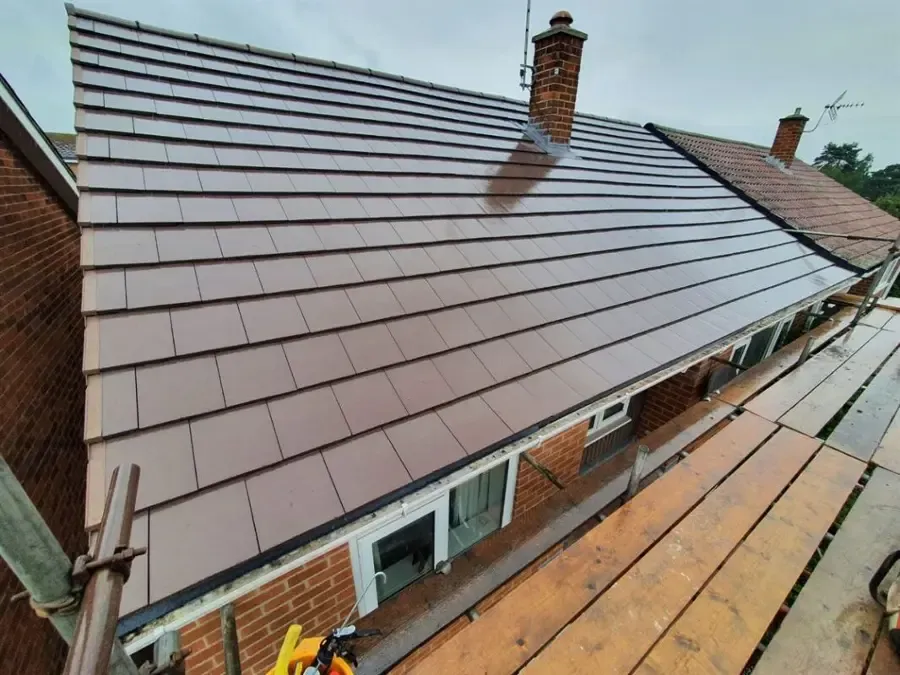
How long a roof lasts depends almost entirely on what it is made of. A natural slate roof on an Edinburgh tenement can last over a century. A felt flat roof on a 1990s garage extension might manage 12 years. The material, the quality of the original installation, the local climate, and how well the roof has been maintained all play a part.
This guide covers the expected lifespan of every common roofing material found on UK properties, what shortens that lifespan in practice, and how to tell when your roof is approaching the end of its working life.
Roof Lifespan by Material
Natural slate: 75 to 100+ years
Natural slate is the longest-lasting roofing material available and the one you will find on the majority of pre-war Edinburgh properties. Welsh slate and Scottish slate roofs installed in the Victorian and Edwardian eras are still performing well on thousands of Edinburgh tenements, townhouses, and villas today.
The slate itself is virtually indestructible. What fails over time is everything around it: the fixing nails corrode (especially the original iron nails), the mortar bedding on ridges and verges cracks, and the lead flashing around chimneys and walls fatigues. A slate roof that has been well maintained with periodic repairs to these components can genuinely last over 100 years.
When slate roofs fail early: poor-quality imported slate (some Chinese and Spanish slates delaminate within 20 to 30 years), incorrect nail gauge, and lack of maintenance are the usual culprits. If your slate roof is shedding thin layers or flaking at the edges, the slate quality is the problem, not the age.
Concrete tiles: 40 to 50 years
Concrete tiles are the most common roofing material on post-war UK housing. If your property was built between the 1950s and the 2000s, there is a good chance it has a concrete tile roof. According to the National Federation of Roofing Contractors (NFRC), a well-made concrete tile roof should last 40 to 50 years.
In Edinburgh and the Lothians, we regularly work on concrete tile roofs from the 1960s and 70s that are now reaching the end of their useful life. The tiles delaminate (the surface layer flakes away), the colour fades, and the mortar bedding on ridges crumbles. Once deterioration is widespread, individual repairs become impractical and a full replacement is the more cost-effective option.
When concrete tiles fail early: frost damage is the main cause in Scotland. Water gets into micro-cracks, freezes, expands, and breaks the tile from the inside. North-facing slopes and properties at higher elevations (like those in Penicuik or the Pentland foothills) see this more frequently than sheltered lowland properties.
Clay tiles: 60 to 80 years
Clay tiles occupy the middle ground between slate and concrete in both lifespan and cost. They are less common in Edinburgh than in southern England, but you will find them on some period properties and higher-end developments.
The main advantage of clay over concrete is colour retention. Concrete tiles fade significantly over their lifespan, while clay tiles hold their original colour because the pigment runs through the entire tile, not just the surface. A clay tile roof installed today should last 60 to 80 years with normal maintenance.
When clay tiles fail early: the main risk is frost damage on lower-quality clay tiles that have not been fired at a high enough temperature. Well-manufactured clay tiles from established UK brands are frost-resistant and extremely durable.
EPDM rubber flat roofs: 25 to 30+ years
EPDM (ethylene propylene diene monomer) is a synthetic rubber membrane used on flat roofs for garages, extensions, dormers, and porches. It is laid as a single seamless sheet, which eliminates the joints that cause most flat roof failures.
A properly installed EPDM roof should last 25 to 30 years or more. The material handles UV exposure, temperature extremes, and standing water far better than traditional felt. It requires virtually no maintenance over its lifespan.
When EPDM fails early: almost always due to poor installation. If the membrane is not bonded correctly at the edges and upstands, or if the substrate underneath is uneven, the system can fail within a few years. Choosing a competent installer matters more with EPDM than with almost any other roofing material.
GRP fibreglass flat roofs: 25 to 30 years
GRP (glass-reinforced polyester) creates a rigid, seamless, waterproof surface. It is the strongest flat roofing option and the best choice for areas that need to bear foot traffic, such as balconies and roof terraces.
Lifespan is comparable to EPDM at 25 to 30 years when installed correctly. GRP is more rigid than EPDM, which makes it better for walkable surfaces but means it can crack if the substrate moves or flexes. It also needs dry conditions during installation, which can be a scheduling challenge in Edinburgh.
Felt flat roofs: 10 to 20 years
Traditional three-layer felt is the oldest and cheapest flat roofing system still in use. It is also the shortest-lived. Older felt roofs found on many Edinburgh garages and extensions typically last 10 to 15 years before they start cracking, blistering, and leaking.
Modern torch-on felt systems perform better, with a lifespan of 15 to 20 years. But even the best felt system is significantly shorter-lived than EPDM or GRP. If your felt flat roof is leaking or showing its age, replacing it with a modern membrane system is usually better value than re-felting. Read our guide on why roofs leak for more on diagnosing flat roof failures.
What Shortens a Roof’s Lifespan
Edinburgh’s climate
Scotland’s west-coast-influenced climate hits roofs hard. Edinburgh gets around 700mm of rainfall per year, frequent freeze-thaw cycles through winter, and strong prevailing winds from the west and north-west. Properties on exposed sites, near the coast in East Lothian, or at higher elevations face even tougher conditions.
The Met Office data for Edinburgh shows an average of 60 frost days per year. Each freeze-thaw cycle puts stress on tiles, mortar, and flashing. Over decades, this adds up.
Poor original installation
A roof is only as good as the people who fitted it. Incorrect nail placement, inadequate ventilation, poor flashing details, and cheap materials all reduce lifespan significantly. We regularly see roofs that should have lasted another 20 years but failed early because corners were cut during installation.
Lack of maintenance
A roof is not a fit-and-forget system. Small problems like a slipped slate, cracked ridge mortar, or a blocked gutter become big problems if they are not caught and fixed. A regular roof inspection every 3 to 5 years is the single best way to maximise your roof’s working life.
Moss and biological growth
Moss holds moisture against the roof surface, accelerates tile deterioration, and blocks gutters with debris as it breaks away. North-facing slopes and roofs shaded by trees are worst affected. Regular roof cleaning removes moss before it causes lasting damage.
Signs Your Roof Is Reaching End of Life
Not sure whether your roof has years left or is on borrowed time? These are the indicators we look for during inspections:
- Widespread tile or slate deterioration across the whole roof, not just isolated spots
- Delaminating concrete tiles where the surface layer is flaking off in patches
- Failed underlay visible in the loft where the felt or membrane has torn or perished
- Sagging or uneven roofline suggesting structural timber problems
- Frequent repairs needed every year or two on different parts of the roof
- Daylight visible through the covering when you look up from the loft space
- The roof is past its expected lifespan based on the material table above
If you are seeing several of these signs, read our guide on 5 signs your roof needs repair for a detailed breakdown, or book a free inspection and we will give you an honest assessment.
When it is time to replace, our guide on what a new roof costs in Edinburgh covers what to expect and how to compare quotes.
Frequently Asked Questions
How long does a slate roof last in Scotland?
A quality natural slate roof in Scotland typically lasts 75 to 100 years. Scottish and Welsh slate are the most durable. Some imported slates have shorter lifespans of 30 to 50 years. The fixing nails, mortar, and flashing will need maintenance during the slate’s lifetime, but the slate itself can outlast the building.
How do I know how old my roof is?
Check your property’s title deeds, home report, or any previous survey reports. If you bought the property with a home report, the roof section may mention the approximate age or condition. Failing that, a roofer can usually estimate the age based on the material, style, and condition during an inspection.
Can I extend my roof’s lifespan?
Yes. Regular inspections (every 3 to 5 years), prompt repairs when issues are spotted, gutter cleaning to prevent water damage, and moss removal on affected slopes all help. A well-maintained roof will last significantly longer than one that is neglected.
Is it worth repairing an old roof or should I replace it?
If the damage is localised and the rest of the roof is sound, repairs are usually the right call. If deterioration is widespread, the underlay has failed, or the timber underneath is compromised, a replacement is more cost-effective than ongoing patch repairs. We assess both options honestly during every inspection.
Do flat roofs last as long as pitched roofs?
No. Even the best flat roof systems (EPDM and GRP) last 25 to 30 years, compared to 40 to 100+ years for pitched roof materials. Flat roofs are more vulnerable to ponding water, UV exposure, and membrane degradation. They are reliable when installed correctly but will always need replacing sooner than a pitched roof on the same property.
How Long Has Your Roof Got Left?
If your roof is approaching the ages listed in this guide, or you have noticed any of the warning signs above, a professional inspection is the best way to find out where you stand. We provide free, no-obligation roof inspections across Edinburgh, East Lothian, the Scottish Borders, and surrounding areas.
We will tell you honestly whether your roof has years of life left, needs targeted repairs, or is ready for replacement. See examples of our work in the project gallery, or get in touch to book your inspection. You can also call us on 07473 431365.
Need Help With Your Roof?
Get a free, no-obligation quote from our experienced team. We cover Edinburgh, the Lothians, and the Scottish Borders.
Get in Touch
Get Your Free Quote
Complete the form or give us a call. We will get back to you to arrange a free, no-obligation estimate for your roofing project.
- 07473 431365
- firstchoiceroofrepairsltd@gmail.com
- Pencraig House, Monksmuir Park, Haddington, EH41 3SB